A Steamer for Voice Actors and Podcasters: The Recording-Day Ritual
A steamer for voice work begins with a modest idea: give the moments before recording a little structure. Before the microphone goes live, there are scripts to mark, levels to check, and notifications to silence. A warm-steam ritual can have its own place in that sequence—a deliberate pause with a rather handsome object, followed by the practical business of making your next take.
For a home booth, podcast desk, or small production studio, the appeal is straightforward. You decide when to step away from the screen, set up carefully, and return to your session. No grand promises, no elaborate ceremony. Think of it as the recording-day equivalent of laying out a proper cuppa: familiar, intentional, and entirely your own.
Why a Steamer for Voice Work Belongs Before the Booth
A useful routine has clear boundaries. The steamer belongs in the preparation portion of your day, with enough time to handle hot water carefully and let the equipment cool afterward. It should never become something you balance beside an audio interface while answering emails and searching for the latest script revision.
Choose a separate, stable spot away from your microphone, computer, cables, and papers. A recording desk already has quite enough responsibilities. Giving the ritual its own location also makes the sequence simple: prepare the space, use the steamer, leave it safely to cool, then move to your recording position.
If you are new to the object itself, What Is a Vocal Steamer? provides a useful introduction. Here, the focus is how to give a warm-steam ritual a sensible place in an ordinary working day.
Meet the Victorian Vocal Steamer
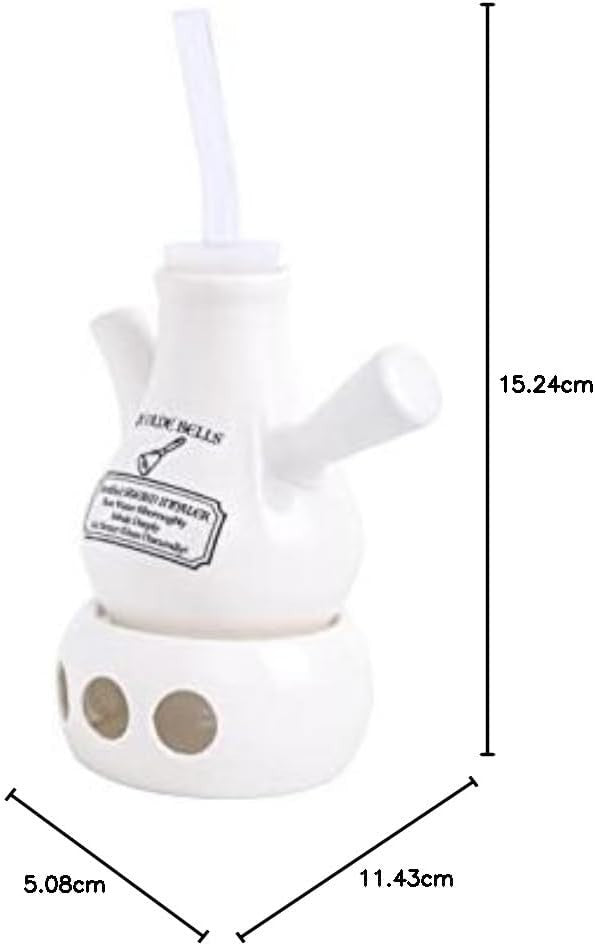
The Ye Olde Bells Victorian Vocal Steamer is a white glazed ceramic steam vessel with a side spout and handle. A clear glass mouthpiece passes through a rubber stopper, and the vessel sits with a vented ceramic warmer base. Assembled, it measures approximately 6 inches tall and 4.5 inches wide: a compact object with rather more parlour character than the usual collection of recording accessories.
It is non-electric, with no cords, plugs, or batteries. You fill it with hot, not boiling, plain water and breathe the warm steam, keeping your face a comfortable distance away. Hot water and steam can scald, so careful handling is central to the routine.
A tealight in the base is optional. Its purpose is simply to keep the water warm for longer; you do not need a candle to use the steamer. That distinction matters when planning a session in a shared studio or any space where open flames are prohibited.
Build a Recording-Day Sequence That Fits Your Work
Start with the session details
Before setting up your steamer, settle the administrative bits. Confirm the script version, pronunciation notes, episode outline, and delivery requirements. For client work, check the requested file format and naming convention. For a podcast, put guest names and your opening questions where you can find them without a frantic scroll.
These tasks give the preparation period a definite purpose. You are making decisions before recording begins, rather than discovering halfway through an introduction that your notes belong to last Tuesday’s episode.
Give the ritual its own space
Set up somewhere you can handle the vessel without reaching across equipment. Keep scripts and loose papers elsewhere. Use hot, not boiling, plain water, and never add oils or other ingredients. The ritual needs no special mixture, however persuasive that little bottle on the shelf may look.
Adults 18 and older only should use the steamer. Keep your face a comfortable distance from the warm steam, and avoid arranging the setup in a way that encourages leaning awkwardly over it. There is no need to turn this into an endurance exercise or a timed challenge.
Move deliberately into recording
Once finished, leave everything somewhere safe to cool. At your recording position, check microphone placement, recording levels, and background noise. Capture a short test and listen back before committing to a full passage. A ritual can mark the transition into work; the test recording tells you what your equipment is actually capturing.
Adapt the Routine for Different Recording Days
For voice actors: place the ritual before your final script review or booth setup, allowing time for careful handling. Keep character notes, alternate readings, and client directions organized separately. If an audition arrives with a tight deadline, choose a preparation sequence that fits the available time without rushing hot water.
For solo podcasters: connect the ritual to a repeatable production checkpoint. Perhaps the episode outline is finished, the recording project is open, and your phone is silenced. That gives the pause a clear beginning and end, rather than letting preparation expand until it consumes the afternoon.
For interviews and shared studios: plan around the room’s rules and other people’s schedules. A non-electric setup requires no outlet, but it still needs an appropriate place for hot water and cooling equipment. Skip the optional tealight wherever open flames are not permitted.
If your calendar also includes teaching, presentations, or extended speaking engagements, explore Big Voice Days habits for teachers and speakers for another perspective on organizing a speaking day.
The Optional Tealight: A Practical Decision
The tealight is an extra for keeping the water warm longer. Whether you use it should depend on your setting and whether you can remain present throughout. A candle adds an open flame to the setup, which deserves your full attention.
- Use the optional tealight only where open flames are permitted.
- Place the setup on a stable, heat-resistant surface.
- Never leave a lit tealight unattended, including while you step into a booth or take a call.
- Let everything cool before handling or cleaning.
The box includes tealights and tweezers, along with the ceramic vessel, ceramic warmer base, glass mouthpiece tube, and rubber stopper. Their inclusion does not make candle use compulsory. A flame-free warm-steam ritual is perfectly consistent with the steamer’s design.
A Heritage Object, with Everyday Housekeeping
Ye Olde Bells, established in 2022, brings a British heritage flavor to this small recording-day accessory. The white ceramic, glass tube, and warmer base offer a touch of choir-loft character without requiring you to furnish your studio like a Victorian drawing room. One handsome object will do nicely.
After use, allow all parts to cool and hand wash only. Build that cleanup into your schedule, especially if your next appointment takes you out of the house. Leaving time for the less glamorous part of the ritual is what makes it practical to repeat.
As a gift, it suits an adult voice actor or podcaster who enjoys distinctive objects and deliberate routines. Consider whether the recipient has a suitable place to use and store it. Its appeal is the warm-steam ritual and heritage styling; choose it on those terms.
Ordering for Your Recording Space
The Ye Olde Bells Victorian Vocal Steamer for a recording-day ritual costs $69.99, with flat $9.99 US shipping. It ships from Traverse City, Michigan, with a shipping timeframe of about 5–6 business days. Shipping is available within the US only.
Returns are available within 30 days for unused items in their original packaging. If buying for someone else, keep that condition in mind when planning the gift.
A recording routine need not be elaborate to feel considered. Prepare your notes, give the warm-steam ritual a safe place in the schedule, and check your equipment before pressing record. Then it is back to the script, the conversation, and the occasional splendidly stubborn sentence.
This article is general information only and is not medical advice. Ye Olde Bells is a warm-steam ritual accessory, not a medical device.