A Steamer for Singers on Tour: Backstage and Travel Etiquette
Taking a steamer for singers on tour begins with a simple courtesy: your personal routine should fit comfortably around everyone else’s. A warm-steam ritual can be a quiet part of getting ready, alongside checking your set list and finding somewhere sensible for your shoes. On the road, though, shared counters, tight schedules, fragile luggage, and venue rules deserve as much attention as the ritual itself. Here is how to make room for it without turning the dressing room into your private Victorian parlour.
Touring with a Steamer for Singers: The Golden Rule
Start by thinking of a steamer as a personal accessory that needs an agreed place and time. A crowded backstage area is a working space: costumes move through it, cables cross it, and somebody is invariably looking for a missing charger. Before unpacking, ask the person managing the room where a vessel containing hot water may safely sit.
Be specific about what you intend to do. Explain that you have a non-electric ceramic vessel, will use hot plain water, and need a stable surface away from passing traffic. If you are considering an optional tealight, ask separately whether open flames are permitted. Permission to use hot water does not amount to permission to light a candle.
Know What You Are Bringing
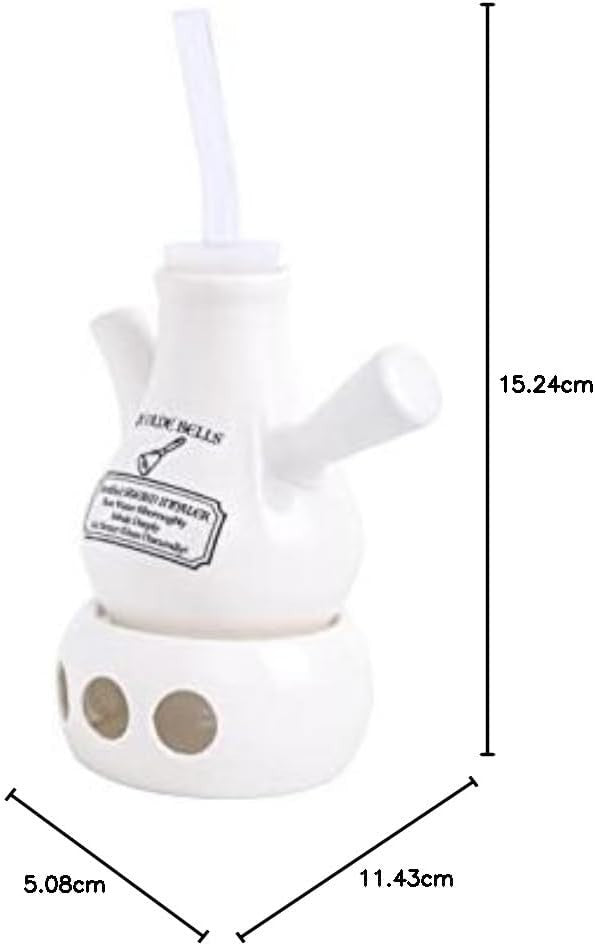
The Ye Olde Bells Victorian Vocal Steamer for singers is a white glazed ceramic steam vessel with a side spout and handle, a clear glass mouthpiece through a rubber stopper, and a vented ceramic warmer base. Assembled, it measures approximately 6 inches tall and 4.5 inches wide. It has rather more dressing-table character than another tangle of charging cables.
It is non-electric, with no cords, plugs, or batteries. You fill it with hot, not boiling, plain water and breathe the warm steam, keeping your face a comfortable distance away. A tealight in the base is optional and only keeps the water warm for longer. The ritual does not require a candle.
The box includes the ceramic vessel, ceramic warmer base, glass mouthpiece tube, rubber stopper, tealights, and tweezers. Those separate pieces deserve a packing plan, especially when your suitcase also contains stage shoes and the emergency packet of biscuits.
Pack for the Journey You Actually Have
Before making it part of your touring kit, consider how you will carry, unpack, wash, dry, and repack it. Ceramic and glass need careful handling. A routine that works beautifully during a weeklong stay may be less practical when you change hotels every morning and leave immediately after the final number.
- Separate the components. Pack the glass mouthpiece apart from the ceramic pieces, with cushioning around each item.
- Prevent movement. Use a protective container with enough padding to stop pieces knocking together or pressing against hard luggage contents.
- Travel with everything empty and dry. Leave time after use for cooling, emptying, hand washing, and drying before packing.
- Check transport rules. Confirm the requirements for your route and carrier, including anything you plan to bring for an optional candle setup.
- Keep access realistic. Avoid burying a fragile kit beneath equipment you will need to unload in a hurry.
Do a complete packing rehearsal at home. Lay out every component, pack it, then unpack it on a surface roughly the size of your likely backstage space. If the arrangement requires an entire dining table, revise it before departure. Touring rewards a modest footprint.
Arrange Hot Water Before Call Time
No electricity is needed for the vessel itself, but you still need a suitable source of hot plain water. Confirm what is available instead of assuming every venue has a kettle, an accessible kitchen, or someone free to fetch water. Ask ahead, especially when your arrival falls close to a sound check or rehearsal.
Use hot water, never boiling water, and remember that both hot water and steam can scald. Plan a short, unobstructed route from the water source to your chosen surface. If that route involves a dark stairwell, a busy costume rail, or stepping over equipment, find another arrangement. A proper cuppa may inspire the mood; it should not inspire a balancing act.
Use plain water only. Never add oils or other additives, including anything chosen for its fragrance. Keep the setup straightforward and keep your face a comfortable distance from the steam.
Make Shared Dressing Rooms Pleasant
Ask your dressing-room companions before setting up, even if the venue has already approved the location. They may need the counter for makeup, paperwork, or costume changes. Agree on a spot and a time, and keep bags and packing materials out of the way. Courtesy is easier when nobody has to guess when you will finish.
Keep the vessel away from the edge of the surface and away from anything that could knock or pull it over. Avoid places beside swinging doors or busy walkways. Do not ask someone to pass a hot vessel across the room simply because you have already settled into your chair.
Give the ritual your attention. Trying to use it while changing clothes, answering production questions, and searching for a missing earring makes the setup harder to manage. Choose a quiet gap, then put it away properly. There is no need to make your personal routine the evening’s additional performance.
Optional Tealights: Check First, Every Time
The simplest touring arrangement may be to skip the optional tealight entirely. Hot plain water is all that is required for the warm-steam ritual. If you would like to use a tealight to keep the water warm for longer, confirm that open flames are permitted in that particular space.
Use a stable, heat-resistant surface and never leave a burning tealight unattended. Keep the setup away from costumes, paper, and other items that could meet the flame. If you are called away, extinguish the candle before leaving. An unexpected entrance cue is still an entrance cue.
For a fuller planning reference, read the Tealight Safety tips. A previous venue’s permission does not carry over to the next stop, and a hotel room needs its own check.
Build Cooling and Cleanup Into the Schedule
Your routine ends when the equipment is safely packed, not when you finish using it. Allow everything to cool before handling it for cleanup. Hand wash only, then give the components time to dry before packing them securely. Do not plan a final use just before the van leaves.
Keep washing and drying arrangements considerate, too. Ask where cleanup is appropriate, avoid occupying a shared sink during the busiest preparation period, and leave the area ready for the next person. For a broader look at organizing your preparation, use the Choir Rehearsal Prep checklist alongside your touring notes.
Decide Whether It Fits Your Tour
This accessory is for adults 18 and older. It suits a packing list only when you can provide a safe surface, suitable water, careful transport, and enough time for cleanup. For a gift, consider the recipient’s travel arrangements as well as their taste for British heritage charm.
The price is $69.99, with flat $9.99 US shipping. Orders ship from Traverse City, Michigan, with shipping taking about 5–6 business days; shipping is US only. Allow room in your departure schedule rather than relying on a last-minute arrival. Returns are available within 30 days for unused items in their original packaging.
Ye Olde Bells was established in 2022, bringing British heritage flavor to a small US-facing shop. On tour, that parlour character works best with thoroughly practical manners: ask first, occupy little space, respect the schedule, and leave everything tidy. Even in the choir loft, consideration travels well.
This article is general information only and is not medical advice. Ye Olde Bells is a warm-steam ritual accessory, not a medical device.