Victorian Steam Inhalers: How to Spot, Collect and Display One
Collecting a Victorian steam inhaler begins with a collector’s pleasure: noticing an object that makes you pause. A curved handle, a glazed ceramic body, an unusual mouthpiece—these details invite a closer look. Whether you are browsing an antique store, assessing an online listing, or choosing a modern piece with British heritage flavor, the trick is to separate appearance, condition, and documented age. Put the kettle on for a proper cuppa, and let’s give this intriguing corner of collecting a sensible inspection.
How to Spot a Victorian Steam Inhaler
Start by deciding what you want to collect. An antique with documented provenance, an unidentified decorative piece, and a newly made vessel inspired by older forms are three different purchases. Each can earn its place on a shelf, but your expectations and budget should match what the seller can actually establish.
The word “Victorian” in a listing is a starting point for questions, rather than proof of age. Ask whether the seller means an object made during that era or a modern design with a period appearance. A handsome silhouette cannot supply its own birth certificate, however confidently it sits in the parlour.
Look at the whole object before the details
Study the vessel’s shape, handle, spout, mouthpiece, and any separate base. Then ask for photographs from every side, including the underside and interior. With an unfamiliar object, avoid identifying it from one feature alone. A seller’s title may be helpful, but clear photographs and supporting records give you more to assess.
- Body: Check the rim, interior, underside, and areas around openings.
- Handle and spout: Request close-ups of their attachment points and any visible damage.
- Mouthpiece: Ask whether it is included, intact, and known to belong with the vessel.
- Separate parts: Establish exactly which pieces are included in the asking price.
- Marks: Request sharp photographs of any lettering, numbers, labels, or stamps.
Assess Condition Without Letting Charm Take Charge
For a display purchase, condition affects both appearance and how confidently you can position the object. Look for chips, cracks, discoloration, glaze lines, and signs of repairs. Ask sellers to describe flaws in writing; photographs alone may leave important details unclear.
Visible wear does not establish age, and a tidy surface does not establish originality. If a seller describes every imperfection as “character,” politely request specifics. Character is splendid company at dinner, but rather less useful as a condition report.
Ask about repairs and replacement parts
A replacement mouthpiece or repaired handle may be acceptable for your collection, provided you know about it before paying. Ask which components, if any, have been replaced, repaired, or added later. If the seller does not know, record that uncertainty instead of filling the gap with an appealing story.
For an older or unidentified vessel, plan on display rather than warm-steam use. An attractive photograph cannot establish whether an object is suitable for hot water, whether its parts fit correctly, or what its materials have encountered. Choose a current product with explicit instructions if a warm-steam ritual is your aim.
Check the Story Before Paying for It
Provenance means the supporting story of an object’s ownership and identification. Ask what documentation accompanies the piece and whether those records clearly refer to that particular object. Keep copies of the listing, seller correspondence, receipts, and any supporting material.
You need not become a full-time researcher to make a thoughtful purchase. You do need to distinguish between what is documented, what is the seller’s opinion, and what remains unknown. For background reading, explore A Brief History of the Victorian Ceramic Inhaler, then return to the evidence for the individual piece you are considering.
Set a complete purchase budget
Before making an offer, calculate the item price, shipping, applicable taxes, and any display supplies you intend to buy. Read the seller’s return terms, especially for fragile objects. Ask how separate ceramic and glass components will be packed, and save the listing’s condition photographs until the purchase is settled.
Without reliable comparisons for a particular piece, avoid assuming that a high asking price signals rarity or quality. Set your own ceiling based on condition, completeness, documentation, and how much you want the object. There is no need to win an auction at the expense of enjoying the result.
Choose Between an Antique and a Modern Heritage Piece
If your interest centers on documented age and ownership, focus on those qualities. If you want a clearly specified object for display and a warm-steam routine, a modern piece may fit your plans more neatly. Ye Olde Bells, established in 2022, brings a British heritage flavor to that second choice.
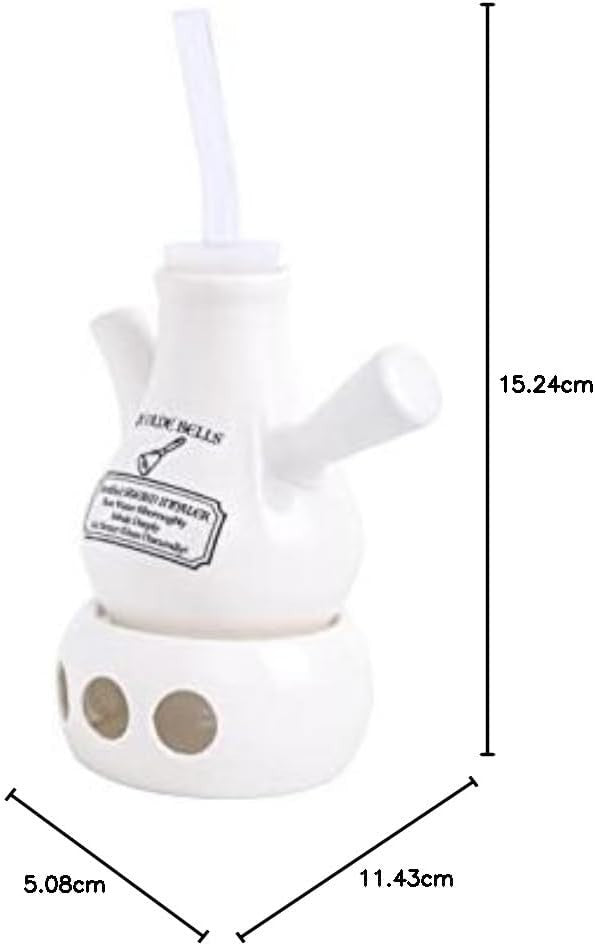
The Ye Olde Bells Victorian Vocal Steamer is a white glazed ceramic steam vessel with a side spout and handle, a clear glass mouthpiece through a rubber stopper, and a vented ceramic warmer base. Assembled, it measures approximately 6 inches tall and 4.5 inches wide—useful measurements to check against your intended shelf.
It is non-electric, with no cords, plugs, or batteries. You fill it with hot, not boiling, plain water and breathe the warm steam. A tealight in the base is optional and only keeps the water warm for longer; it is not required. The box includes the ceramic vessel, ceramic warmer base, glass mouthpiece tube, rubber stopper, tealights, and tweezers.
The price is $69.99, with flat $9.99 US shipping. Orders ship from Traverse City, Michigan, with a shipping timeframe of about 5–6 business days. Shipping is US only, and returns are available within 30 days for unused items in their original packaging. For another point of comparison, read Dr Nelson's Inhaler vs Ye Olde Bells.
Display Your Piece With Room to Be Admired
Choose a stable shelf or cabinet with enough depth for the entire base. Position the vessel away from the edge, leaving space around the handle and any projecting glass. A crowded shelf makes accidental contact more likely, especially when someone reaches past it for a book.
A plain backdrop lets an unusual outline stand out. Try a restrained arrangement with a few books or a small card identifying the object. If its age or maker is uncertain, say so on the card. “Maker unknown; acquired in 2026” is a perfectly respectable record if accurate.
For a little parlour or choir-loft atmosphere, use neighboring objects sparingly. The vessel already supplies the conversation starter. Keep receipts and research separately in a folder, and photograph your arrangement so you have a record of each component.
Keep Display and Warm-Steam Use Thoughtful
If using the Ye Olde Bells vessel, follow its safety requirements every time. It is for adults 18 and older, with plain water only—never oils or additives. Hot water and steam can scald, so keep your face a comfortable distance away.
If you choose the optional tealight, use a stable, heat-resistant surface, only where open flames are permitted, and never leave it unattended. A display shelf should not automatically become the place you use it. Let everything cool before handling or cleaning, and hand wash only.
A satisfying collection can begin with one carefully chosen piece. Give equal attention to its condition, its documented story, and the space where it will live. Whether you favor an antique for the cabinet or a modern vessel for a pre-performance routine, a considered purchase leaves you with something worth enjoying long after the wrapping is cleared away.
This article is general information only and is not medical advice. Ye Olde Bells is a warm-steam ritual accessory, not a medical device.